
Close Menu
  • Top Story
  • Weekly
  • Latest
  • Editorial
  • Opinion
  • Interview
  • Feature
  • Sports
  • News
  • J&K
  • World
  • Education
  • Health
  • Economy
  • Culture
  • Literature
  • Lifestyle
  • Books
What's Hot

Can Indo-Pak Shared Past Survive Divided Present as SCO Dialogue Takes Off?

November 20, 2026

Dr. Nissar Hussain—They Don’t Make Them Like That Anymore

November 7, 2026

What Does Bangladesh Intelligence Chief’s India Visit Signal for Bilateral Ties?

October 27, 2026
Facebook X (Twitter) Instagram
Trending
  • Can Indo-Pak Shared Past Survive Divided Present as SCO Dialogue Takes Off?
  • Dr. Nissar Hussain—They Don’t Make Them Like That Anymore
  • What Does Bangladesh Intelligence Chief’s India Visit Signal for Bilateral Ties?
  • R&AW Hosts 13-Nation Intelligence Conference in New Delhi
  • YSRCP alleges widespread violence against candidates during Andhra Pradesh local poll nominations
  • Bureaucratic Bully and the Burden of Authority
  • India’s World Cup Dream
  • Policing Dissent, Punishing Democracy—When the State Fears Its Own People
Facebook X (Twitter) Instagram
 Kashmir Newsline – Expression Unleashed Kashmir Newsline – Expression Unleashed
  • Weekly

    Weekly Dec 25 – Dec 31, 2022

    December 25, 2022

    Weekly Dec 05 – 11 Dec,2022

    December 7, 2022

    Weekly Nov 28 – Dec 04, 2022

    November 30, 2022

    Weekly November 21-27

    November 22, 2022

    Weekly November 14-20

    November 16, 2022
  • News
    1. India
    2. South Aisa
    3. World
    Featured
    Recent

    Can Indo-Pak Shared Past Survive Divided Present as SCO Dialogue Takes Off?

    November 20, 2026

    Dr. Nissar Hussain—They Don’t Make Them Like That Anymore

    November 7, 2026

    What Does Bangladesh Intelligence Chief’s India Visit Signal for Bilateral Ties?

    October 27, 2026
  • Feature
    1. Interview
    2. Literature
    3. Editorial
    4. Opinion
    5. Top Story
    6. Books
    7. View All

    Interview: ‘Travel, Observing and Tasting is the Best Way to Learn’

    October 2, 2023

    AS Dulat’s Kashmir Stories

    February 4, 2023

    Interview: ‘People are Deeply Pained by Mirwaiz’s Absence from Jamia Masjid’

    November 16, 2022

    ‘Abrogation of Article 370 has Made Kashmir More Dangerous than 1990s’

    October 18, 2022

    The Poet of Love—Daagh Dehlvi’s Poetry has Native Idiom and Sufi Undercurrent

    May 30, 2023

    The Breadth and Sweep of Sahir Ludhianvi’s Works

    March 8, 2023

    Memories of Gulmarg

    January 28, 2023

    ‘If This Language Lives On, Rahi Also Lives On’

    January 18, 2023

    Kashmir Needs Collective Fight against Glaring Drug Abuse

    December 27, 2022

    Healthcare Emergency

    December 7, 2022

    Traffic Mess: Who is to Blame? 

    November 30, 2022

    Give the Artists the Space They Need

    November 23, 2022

    Can Indo-Pak Shared Past Survive Divided Present as SCO Dialogue Takes Off?

    November 20, 2026

    Dr. Nissar Hussain—They Don’t Make Them Like That Anymore

    November 7, 2026

    What Does Bangladesh Intelligence Chief’s India Visit Signal for Bilateral Ties?

    October 27, 2026

    Bureaucratic Bully and the Burden of Authority

    October 16, 2026

    Can Indo-Pak Shared Past Survive Divided Present as SCO Dialogue Takes Off?

    November 20, 2026

    Dr. Nissar Hussain—They Don’t Make Them Like That Anymore

    November 7, 2026

    What Does Bangladesh Intelligence Chief’s India Visit Signal for Bilateral Ties?

    October 27, 2026

    India’s World Cup Dream

    October 16, 2026

    Book Review—Shawls and Shawlbafs of Kashmir

    September 12, 2024

    Book Review: The Divine Dialect of Flowers

    October 5, 2023

    The Collision That Birthed Religion

    March 18, 2023

    Book Review: What is the Meter of the Dictionary?

    March 2, 2023

    Can Indo-Pak Shared Past Survive Divided Present as SCO Dialogue Takes Off?

    November 20, 2026

    Dr. Nissar Hussain—They Don’t Make Them Like That Anymore

    November 7, 2026

    What Does Bangladesh Intelligence Chief’s India Visit Signal for Bilateral Ties?

    October 27, 2026

    R&AW Hosts 13-Nation Intelligence Conference in New Delhi

    October 27, 2026
  • J&K

    Hundreds of Sheep Face Starvation as Forest Officials Bar Grazing

    March 14, 2024

    Photo Essay: Fire Fighting Service In Dal Lake

    March 8, 2024

    Tatakooti—Challenges of Owning a Towering Peak

    October 5, 2023

    Interview: ‘Travel, Observing and Tasting is the Best Way to Learn’

    October 2, 2023

    What is Ailing the Apple Farming?

    September 16, 2023
  • Lifestyle

    Eating Together Binds Families

    November 22, 2022

    How Smartphones are Harming Children

    October 25, 2022

    Raising a Champion

    October 11, 2022

    The Reluctant ‘Urban Poor’

    August 28, 2022

    The Reluctant ‘Urban Poor’

    August 21, 2022
  • Economy

    Explained: What is a Credit Score and Why is it Important?

    December 27, 2022

    Rights of Special Bank Customers

    November 30, 2022

    How to be a Socially Responsible Investor

    November 23, 2022

    Stock Exchange Crimes

    November 16, 2022

    Avoid Debt Trap

    November 8, 2022
  • Culture
  • Entertainment
  • Sports

    India’s World Cup Dream

    October 16, 2026

    Tatakooti—Challenges of Owning a Towering Peak

    October 5, 2023

    When Salim was in the Mood

    July 12, 2023

    Why Does Team India Fail Consistently?

    December 27, 2022

    Hail Ben Stokes and Co.

    December 7, 2022
 Kashmir Newsline – Expression Unleashed Kashmir Newsline – Expression Unleashed
Home » Can Indo-Pak Shared Past Survive Divided Present as SCO Dialogue Takes Off?
Opinion

Can Indo-Pak Shared Past Survive Divided Present as SCO Dialogue Takes Off?

Kashmir NewslineBy Kashmir NewslineNovember 20, 2026Updated:November 20, 2026No Comments6 Mins Read
Facebook Twitter Pinterest LinkedIn Tumblr Email
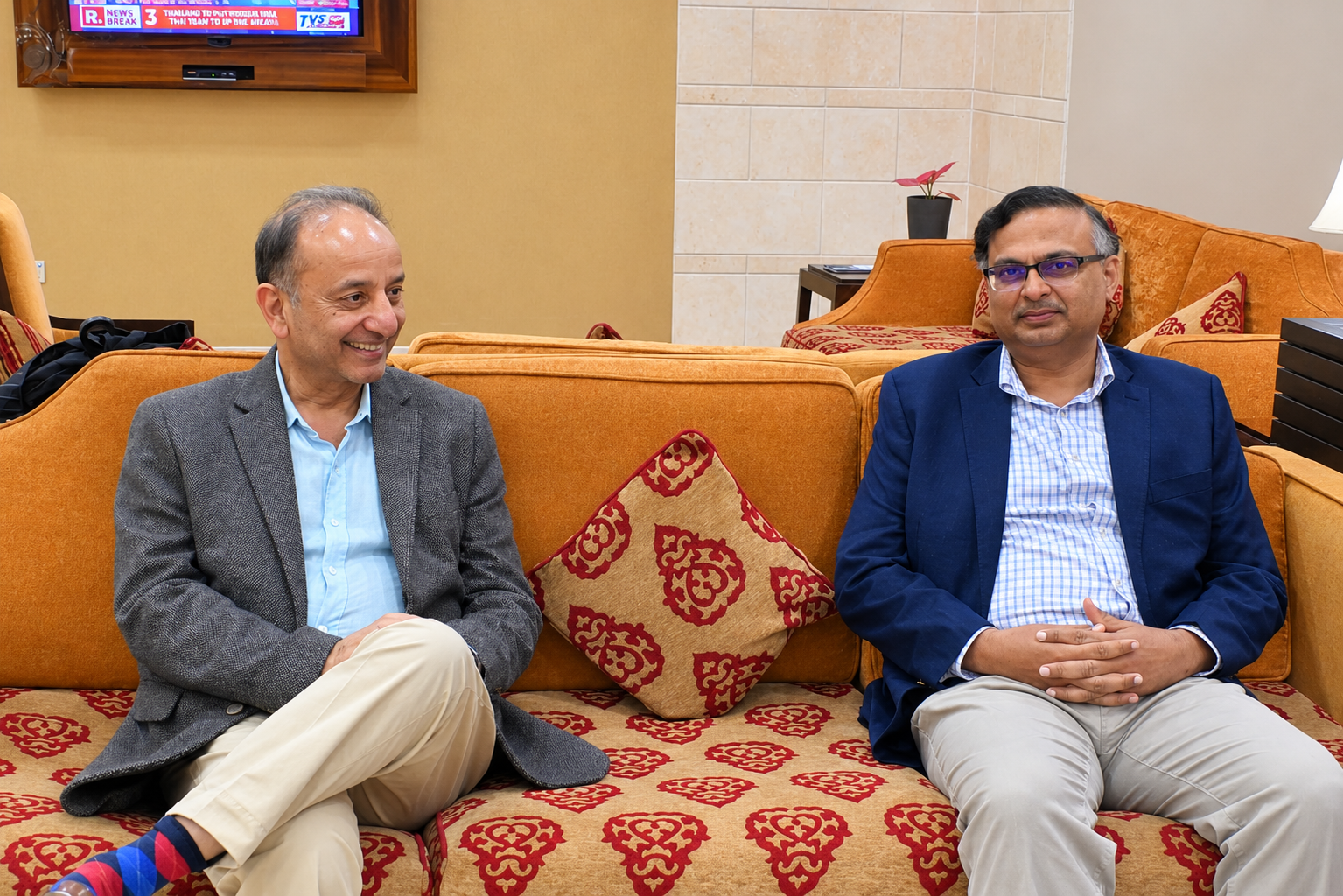
Pakistan’s Federal Minister for Climate Change and Environmental Coordination Dr. Musadik Malik (left) with Chargé d'affaires of the Pakistan High Commission in New Delhi. Malik is leading the Pakistani delegation at SCO Civilizational Dialogue Forum. Image: X
Share
Facebook Twitter LinkedIn Pinterest Email
Until both capitals reckon honestly with the past they share, forums held atop Delhi’s ancient ruins will remain an exercise in nostalgia—performed in the shadow of a border that remains, in every sense, on a war footing.
Shome Basu

Beneath the sandstone ramparts of Purana Qila, where the archaeological strata of Delhi stretch backward from the British internment camps of the Second World War to the Lodis, Sher Shah Suri, the Mughals, and the ancient settlement of Indraprastha, diplomats and scholars from across Central Asia, Russia, China, South Asia (India-Pakistan being key) have gathered this week to celebrate what the host government calls a shared civilisational continuum.

The inaugural Shanghai Cooperation Organisation (SCO) Civilisational Dialogue Forum, running from November 20 to 22, is designed as an exercise in cultural statecraft. Prime Minister Narendra Modi’s inauguration of the three-day event features exhibitions of archaeological relics dating from 1200 BCE to 1200 CE alongside an 18th century Mahabharata scroll, framing Eurasia through the Sanskrit ethos of Vasudhaiva Kutumbakam—the world is one family. Yet, just beyond the manicured lawns of the sixteenth-century fortress, the geopolitical reality of the Indian subcontinent tells a starkly different story: one of suspended treaties, hair-trigger deterrence, and two nuclear-armed neighbours locked in a battle over who owns the past.

Among the delegations arriving in the Indian capital on Friday is a three-member contingent from Islamabad led by Pakistan’s Federal Minister for Climate Change and Environmental Coordination, Dr. Musadik Malik. It is the first visit by a Pakistani cabinet minister to India since Bilawal Bhutto Zardari attended an SCO conclave in Goa in May 2023. Driven largely by diplomatic obligation—Pakistan holds the rotating SCO chairmanship ahead of next year’s summit in Islamabad—Malik’s itinerary includes cultural sessions and a scheduled visit to the nearby dargah of the thirteenth-century Sufi saint Hazrat Nizamuddin Auliya, steps away from Humayun’s Tomb, the garden mausoleum built for the Mughal emperor who fatally stumbled down the stone stairs of his library inside Purana Qila in 1556.
No bilateral talks are on the table. None are expected.

To walk the short distance between Purana Qila and Nizamuddin is to move through a landscape that effortlessly synthesises Sanskritic, Persianate, and Sufi traditions. To stand at the Attari-Wagah border or along the Line of Control (LoC) in Kashmir, however, is to confront the violent rupture of 1947, when Partition converted a shared civilisational geography into what many on both sides of the Radcliffe Line experience as an enduring political and religious anomaly.

That rupture is no longer merely historical; over the past eighteen months, it has acquired a perilous new military grammar. Bilateral trade and formal dialogue have remained frozen since the 2019 Pulwama suicide bombing and India’s subsequent airstrikes in Balakot which was followed by Pakistan’s Operation Swift Retort. Whatever fragile equilibrium survived that crisis shattered in May 2025 following the Pahalgam attack in which 26 tourists were gunned down. New Delhi launched Operation Sindoor targeting militant headquarters in Bahawalpur and Muridke, It was followed by a drone warfare and missile salvos between the two nuclear-armed nations. Although a ceasefire halted the exchange at the hundredth hour,
Nowhere is the weaponisation of shared geography more acute than in the portfolio overseen by Pakistan’s visiting minister. The Indus river system—which rises in Tibet, flows through India and sustains the plains of Pakistan before emptying into the Arabian Sea—cradled the Bronze Age cities of Mohenjo-daro and Harappa. For over six decades, the 1960 World Bank-brokered Indus Waters Treaty survived wars and crises as a rare monument to functional cooperation. In the wake of Operation Sindoor, New Delhi placed the treaty in abeyance, transforming a civilisational lifeline into an instrument of coercive diplomacy.

Meanwhile, inside both countries, the past itself is being systematically edited to fit contemporary ideological moulds. Across the border in Pakistan, state curricula have long treated the subcontinent’s history as beginning with the eighth-century arrival of Arab armies or the 1940 Lahore Resolution, rendering the Vedic and Buddhist heritage of Taxila and Gandhara an awkward prelude, even as the state maintains Sikh shrines like Kartarpur and Hindu temples at Katas Raj and Hinglaj.

In India, a parallel narrowing is underway. Recent revisions to National Council of Educational Research and Training (NCERT) textbooks have pared back chapters on the Delhi Sultanate and the Mughal Empire, casting centuries of Indo-Islamic rule primarily as an era of foreign subjugation. Yet the Indian state continues to draw its most potent symbols of sovereignty and global cultural capital from that very inheritance—whether through the tourism revenue generated by the Taj Mahal or the annual ritual of the Prime Minister addressing the nation every August 15 from the ramparts of the Mughal-built Red Fort, fulfilling Subhas Chandra Bose’s wartime rallying cry of Chalo Dilli.

At the heart of this civilisational impasse remains Kashmir—a Gordian knot that neither security operations nor cultural symposia have managed to untie. Earlier this week, on November 18, security forces in south Kashmir’s Kulgam district killed twenty-two-year-old Mohd Lateef Bhat, described by police as the last surviving active local commander of Lashkar-e-Taiba in the Valley. Officials hailed the operation as a milestone, marking the first time since the insurgency erupted in 1989 that no local militant remains listed as active.

Yet in the villages straddling the LoC, where families remain divided by concertina wire and shared Kashmiri linguistic and Sufi traditions endure across the cease-fire line, tactical victories have rarely translated into emotional integration. Infrastructure projects and the elimination of militant commanders address the symptoms of instability, not the underlying political alienation of a population caught between two competing nationalisms.

As delegates inside Purana Qila debate monastic trails, classical music, and ancient manuscripts over the next two days, the limits of cultural diplomacy will be on full display. Civilisational dialogue cannot serve as a substitute for resolving the core bottlenecks of cross-border militancy, river-water sharing, and the political aspirations of Kashmiris. Reclaiming a shared South Asian heritage requires more than curating museum exhibitions. Until both capitals reckon honestly with the past they share, forums held atop Delhi’s ancient ruins will remain an exercise in nostalgia—performed in the shadow of a border that remains, in every sense, on a war footing.

Shome Basu is a New Delhi-based senior journalist and political analyst.
Share. Facebook Twitter Pinterest LinkedIn Tumblr Email
Kashmir Newsline
  • Website

Related Posts

Dr. Nissar Hussain—They Don’t Make Them Like That Anymore

November 7, 2026

What Does Bangladesh Intelligence Chief’s India Visit Signal for Bilateral Ties?

October 27, 2026

Bureaucratic Bully and the Burden of Authority

October 16, 2026
Leave A Reply Cancel Reply

Top Posts

Team India’s Next Big Thing

July 6, 202227,495 Views

Why This Alpine Lake Trek Stands Out

July 6, 202225,436 Views

India’s Majoritarian Politics and the Role of Media

July 6, 202224,130 Views

Fragile Media Economies and Lack of Opportunities in Kashmir

July 6, 202223,238 Views
Don't Miss
Opinion

Can Indo-Pak Shared Past Survive Divided Present as SCO Dialogue Takes Off?

By Kashmir NewslineNovember 20, 20260

Until both capitals reckon honestly with the past they share, forums held atop Delhi’s ancient…

Dr. Nissar Hussain—They Don’t Make Them Like That Anymore

November 7, 2026

What Does Bangladesh Intelligence Chief’s India Visit Signal for Bilateral Ties?

October 27, 2026

R&AW Hosts 13-Nation Intelligence Conference in New Delhi

October 27, 2026
Stay In Touch
  • Facebook
  • Twitter
  • Pinterest
  • Instagram
  • YouTube
  • Vimeo

Based out of Srinagar (Jammu & Kashmir) and brought out in print as a weekly with online presence as well, Kashmir Newsline is solely committed to ethical, fearless journalism. We at Kashmir Newsline cover politics, geopolitics, international relations, social issues, health, sports and almost everything else as objectively as humanly possible. Kashmir Newsline carries detailed reports and in-depth analysis on multiple developments happening in Kashmir and around the world.

Facebook X (Twitter)
Our Picks

Can Indo-Pak Shared Past Survive Divided Present as SCO Dialogue Takes Off?

November 20, 2026

Dr. Nissar Hussain—They Don’t Make Them Like That Anymore

November 7, 2026

What Does Bangladesh Intelligence Chief’s India Visit Signal for Bilateral Ties?

October 27, 2026
Most Popular

Team India’s Next Big Thing

July 6, 202227,495 Views

Why This Alpine Lake Trek Stands Out

July 6, 202225,436 Views

India’s Majoritarian Politics and the Role of Media

July 6, 202224,130 Views
Facebook X (Twitter)
  • Home
  • About Us
  • Politics
  • J&K
  • E-Paper
  • Contact Us
© 2026 Kashmir Newsline. Designed by NexG IT Solutions.

Type above and press Enter to search. Press Esc to cancel.

Go to mobile version