






A greeting is, after all, meant to convey goodwill. It should not become a reason to question someone’s integrity, identity or right to belong.
By Khadijah Khan
Assalamu Alaikum, Namaste, Sat Sri Akal, Vanakkam! These are among the greetings with which a typical Indian conversation—or simply an exchange of pleasantries—begins. Greetings are, after all, expressions of goodwill, until one of them becomes anathema to certain people simply because it is associated with a particular community.
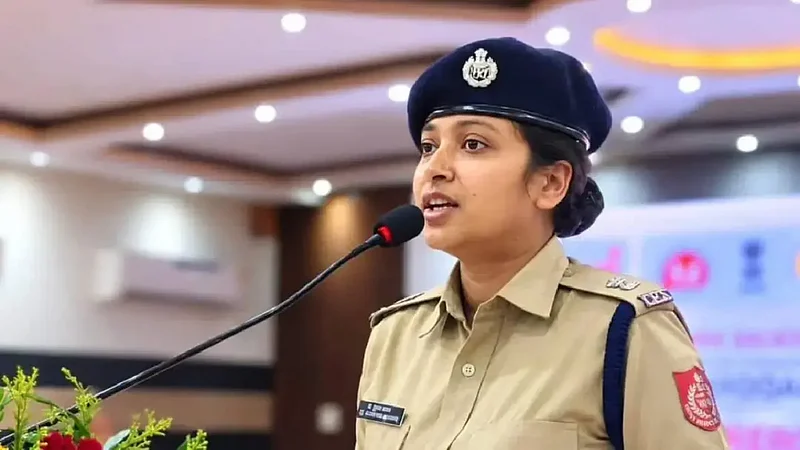
The latest imbroglio around IPS officer Bushra Bano, following the viral video in which she greets people with “Assalamu Alaikum”, is a case in point. For many, it became the starting point for a debate over whether government servants should use faith-specific expressions when greeting people. The story soon acquired a life of its own, shaped by the wider social-media fray around religion and identity.
A Greeting Is Not Always a Slogan
We seldom question what we say when we greet. Someone begins a conversation with a “Namaste” or ends it with a “God bless you”, and we rarely stop to consider the significance of the words. The same goes for “Assalamu Alaikum”, which means “peace be upon you” and is a favourite greeting of mine, or “Inshallah”, “Rab Rakha” or “Vanakkam”.
We use these words with familiarity, not necessarily because we know their origins or meanings, but because someone, somewhere, taught us that they are nice things to say. This is how culture is carried forward.
Greetings are part of our history. The words we exchange today are part of conversations our ancestors had among themselves and passed on to us, long before we had to engage in the kind of debates we do today.
I have heard people in Kashmir say “Khudayas Hawala”—God be with you—when parting, while others say “Rab Rakha”, “Ram Ram”, “Jai Jinendra” or “God bless you”. These expressions have survived because they carry familiarity and goodwill. When every greeting is viewed as a potentially loaded statement, however, even an ordinary exchange can become fraught with suspicion.
When we turn everything into a debate, we deny ourselves the simple pleasures of everyday conversation. So why do greetings have the potential to become more than just greetings?
Why Greetings Matter More Than We Realise
All societies have cultural touchstones that help us navigate everyday interactions. A greeting is perhaps the simplest of these. It acknowledges the presence of another human being, which may be why greetings stay with us for generations even as languages change and evolve.
India is a country of many languages and dialects. Its diversity has always been one of its defining characteristics, and nowhere is this more apparent than in the way Indians greet one another. Schools observe different festivals, workplaces reflect an eclectic mix of people, and Indians routinely move between languages and cultural expressions depending on whom they are speaking to.
I have always found it endearing that Indians adapt their greetings to suit the occasion. We greet our friends differently from our teachers, shopkeepers differently from officials, and our parents differently from our children. Our greetings are shaped by the relationships we have with one another.
That familiarity allows us to connect and, in doing so, coexist in the kaleidoscope of cultures that we call India.
Perhaps that is why debates about greetings touch upon something deeper than the words themselves. They remind us of the need to be sensitive to the differences around us and to treat everyone equally, even when we do not share the same cultural or religious practices. Perhaps the way to begin is with something as simple as politeness.
Neutrality Beyond Appearances
Public servants occupy a unique position in our society. They are duty-bound to serve every citizen, regardless of religion, language or background. India’s Constitution guarantees equality to all citizens and the freedom to practise and propagate one’s faith, while public servants are expected to discharge their duties faithfully and without discrimination.
These principles are not necessarily contradictory. The question is whether neutrality requires uniformity of language or conduct when it comes to the everyday behaviour of public servants.
It is easy to equate neutrality with neutrality of language. But when judging a public servant, it is worth looking beyond the words they use. An officer’s decisions, their conduct when dealing with citizens, and whether they treat everyone equally have a far greater bearing on impartiality than the few words with which they begin a conversation—even if those words happen to be “Assalamu Alaikum”.
Whether neutrality should extend to the way public servants greet people is a legitimate question for debate. But a greeting and the impartial discharge of official duties should not be treated as one and the same thing.
Difference Between Perception and Conduct
Critics of faith-specific greetings by public servants argue that an officer in uniform ought not to use such expressions while performing official duties. Their argument rests on neutrality and the perception of impartiality. This is understandable, given that public trust is crucial to the functioning of democratic institutions.
But perceptions can be misleading. Uniformity of language does not guarantee impartiality, just as the absence of it does not necessarily indicate favouritism.
If public servants were judged solely by the words they use, how would we distinguish between those who are genuinely impartial and those who merely appear to be? Conduct is surely a more meaningful measure of impartiality than the few words spoken at the beginning of a conversation.
Public Trust Is Built Through Conduct
Opinions are often formed on the basis of what we see and hear rather than the complete facts. There is nothing inherently wrong with that, provided we recognise the difference between perception and established fact.
Public trust rests on fairness and impartiality. An officer who treats everyone equally and conducts themselves with integrity inspires confidence because citizens can see that public responsibility is being exercised fairly and with respect for their dignity.
The question, then, is not simply whether a particular greeting is appropriate. It is whether a public servant conducts themselves fairly when dealing with citizens. That is what ultimately gives people confidence in the person entrusted with public responsibility.
And this is where the treatment of Bushra Bano becomes troubling. It is one thing to debate whether public servants should use greetings associated with particular faiths. It is quite another to single out and harass a woman officer for using a greeting that is an ordinary part of her cultural and social vocabulary.
If people from different communities can use greetings rooted in their own traditions—and rightly so—why should there be a special problem when a Muslim police officer says “Assalamu Alaikum”? If “Namaste”, “Sat Sri Akal”, “Jai Jinendra” or other culturally rooted greetings are not automatically treated as declarations of institutional bias, neither should “Assalamu Alaikum” be.
A Muslim officer does not cease to be Muslim when she puts on a uniform, just as a Sikh, Hindu, Christian or Jain officer does not cease to belong to their cultural world. What matters is whether they perform their duties impartially and treat citizens fairly.
Whether this controversy fades away or not, the questions it has raised about the kind of society we wish to build will remain relevant. Democracies thrive on differences, and it is our ability to deal with those differences that ultimately matters.
We should be careful not to turn every cultural expression into a test of loyalty or impartiality. Most importantly, we should not allow a woman officer to be judged, vilified or harassed simply for practising her right to use a greeting that is part of her culture.
A greeting is, after all, meant to convey goodwill. It should not become a reason to question someone’s integrity, identity or right to belong.
Perhaps the best thing we can do for our democracy is to ensure that disagreements do not become accusations, and that we do not weaponise the ordinary expressions of our diverse lives against one another.
Khadijah Khan is a Delhi University undergrad student.